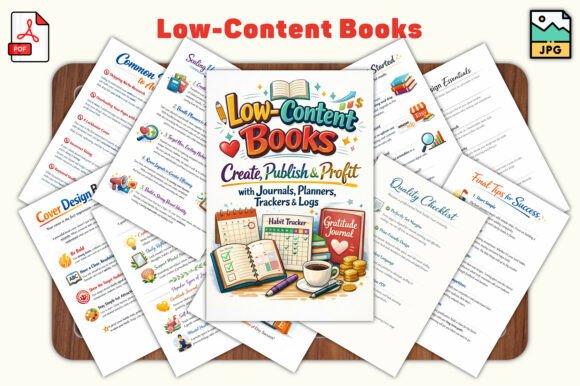
Low-Content Books – Create, Sell Journals, Planners, Trackers, Logs
Low-Content Books are a growing trend in the digital product space, offering creators a simple yet powerful way to design and sell printable journals, planners, trackers, and logs. These books are designed with minimal text and maximal visual appeal, allowing users to customize them for personal or professional use. Whether you're an entrepreneur looking to build a passive income stream or someone who loves organizing their life, Low-Content Books can be a valuable tool.
At their core, Low-Content Books are digital templates that provide a clean, structured layout. They typically feature blank or minimally filled pages that can be used for tracking habits, setting goals, planning projects, or even journaling. Unlike traditional books that rely on extensive content, these templates focus on form over function, making them ideal for those who want to create products quickly without spending hours writing or designing from scratch.
Who Can Benefit from Low-Content Books?
Low-Content Books are incredibly versatile and can be tailored to suit a wide range of audiences and industries. For instance, a busy parent might use a planner to keep track of school schedules, doctor appointments, and family events. A student could benefit from a habit tracker to stay on top of study routines and deadlines. Meanwhile, a small business owner might use a project tracker to manage tasks, deadlines, and client interactions more efficiently.
These books are also popular among coaches, consultants, and wellness professionals who offer personalized tools to their clients. By creating and selling customized Low-Content Books, they can provide their audience with practical resources that align with their brand and expertise. This not only adds value but also helps build trust and loyalty with their followers.
Real-World Applications of Low-Content Books
The beauty of Low-Content Books lies in their adaptability. Here are some common scenarios where they can be put to good use:
- Daily Planning: A 30-page Low-Content Book can be structured as a weekly planner, helping users organize their time effectively. Each page can include sections for to-do lists, calendars, and reflections.
- Habit Tracking: With customizable layouts, users can create trackers for fitness routines, meditation practices, or productivity habits. These can be printed and used daily or kept digitally for easy access.
- Goal Setting: Many people struggle with setting and achieving long-term goals. A goal-setting tracker within a Low-Content Book can help break down objectives into manageable steps and monitor progress over time.
- Project Management: Freelancers and entrepreneurs often need to juggle multiple projects at once. A Low-Content Book can serve as a task manager, allowing users to list tasks, assign priorities, and set deadlines.
- Journaling: For those who enjoy self-reflection, a journal-style Low-Content Book offers a blank canvas for thoughts, ideas, and insights. It can be used for gratitude journaling, creative brainstorming, or even therapy-related exercises.
Each of these applications shows how Low-Content Books can be tailored to meet individual needs. The key is to understand your audience and what kind of structure will best support their goals.
Why Choose a Low-Content Book Template?
Creating a Low-Content Book from scratch can be time-consuming, especially if you're not familiar with graphic design software. That's where pre-designed templates come in handy. A well-crafted template provides a solid foundation that you can easily customize to fit your brand or purpose. Here are a few reasons why using a template is beneficial:
- Saves Time: Instead of starting from zero, you can use existing layouts and focus on adding your own content or branding elements.
- Professional Look: Templates are designed by experts to ensure a clean, aesthetically pleasing appearance that looks polished and professional.
- Easy Customization: Most templates allow for simple edits, such as changing fonts, colors, or adding logos. This makes it easy to personalize the book without needing advanced design skills.
- Print-Ready Format: Many templates are designed for 6×9″ vertical format, which is ideal for printing as a physical book or using as a digital download.
By choosing a template, you can streamline the process of creating a Low-Content Book and ensure that the final product meets high-quality standards.
Considerations Before Creating a Low-Content Book
While Low-Content Books offer many benefits, there are a few things to consider before diving in:
- Know Your Audience: Understanding who will be using your book is essential. Different groups may have different needs, so it's important to tailor the content and design accordingly.
- Set Clear Goals: What do you want your book to achieve? Whether it's helping users stay organized, encouraging self-improvement, or generating income, having clear goals will guide your design choices.
- Test and Refine: Once your book is created, test it with a small group of users to gather feedback. Use this information to refine the design and improve the user experience.
- Choose the Right Platform: Decide where you'll be selling your book—KDP, Etsy, Gumroad, or another platform. Each has its own requirements, so make sure your file format (PDF or JPG) and pricing strategy align with the platform's guidelines.
These considerations can help ensure that your Low-Content Book is both useful and marketable.
Whether you're creating a planner for yourself or selling one to others, Low-Content Books offer a flexible and practical solution. Their simplicity and adaptability make them a great choice for anyone looking to organize their life or generate income through digital products. With the right template, you can create something that's both functional and beautiful—perfect for any occasion or purpose.