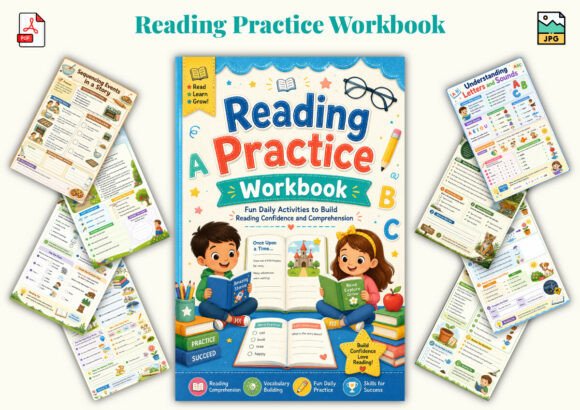
Reading Practice Workbook: A Fun and Effective Tool for Young Learners
Building strong reading skills is a crucial milestone in a child's educational journey. For young learners, especially those just beginning to explore the world of books, the right resources can make all the difference. The Reading Practice Workbook offers a comprehensive and engaging approach to literacy development, designed to help early readers gain confidence and fluency in a structured yet enjoyable way. Whether used at home, in the classroom, or as part of a homeschool curriculum, this workbook provides an effective foundation for building essential reading skills.
The Reading Practice Workbook is more than just a collection of exercises—it’s a well-rounded tool that supports various aspects of reading comprehension, vocabulary expansion, and sentence construction. With its focus on interactive learning, it ensures that students are not only practicing their reading but also developing a deeper understanding of the material they're engaging with. This makes it an excellent resource for educators, parents, and students alike who are looking for a practical and effective way to enhance reading abilities.
Understanding the Needs of Early Readers
Early readers often face challenges such as recognizing sight words, understanding context clues, and building fluency. These foundational skills are essential for progressing in reading, and without proper support, students may struggle to keep up with their peers. Additionally, maintaining motivation and interest in reading can be difficult when the material feels repetitive or unengaging.
For teachers and parents, finding resources that align with these developmental needs while keeping children engaged is a top priority. The Reading Practice Workbook addresses these concerns by incorporating a wide range of activities that cater to different learning styles and abilities. From phonics-based exercises to story sequencing tasks, each activity is designed to reinforce key reading concepts in a fun and interactive way.
What Makes the Reading Practice Workbook Unique?
The Reading Practice Workbook stands out due to its variety of content and user-friendly design. It includes 31 professionally designed pages filled with diverse activities that promote both reading and writing skills. These include reading comprehension passages, vocabulary building exercises, and sentence-building tasks that encourage critical thinking and creativity.
One of the standout features of the workbook is its inclusion of progress tracking pages, which allow educators and parents to monitor a student's growth over time. This helps identify areas where additional support may be needed and celebrate milestones along the way. Furthermore, the clean layout and easy-to-read format ensure that even the youngest learners can navigate the workbook independently.
The workbook is available in high-quality JPG files and a print-ready PDF format, making it versatile for both digital and physical use. Its size (6×9 inches) is ideal for small hands, and the cute classroom-inspired design adds an element of fun that keeps students motivated to complete their work.
Practical Applications for Different Users
The Reading Practice Workbook is suitable for a wide range of users, including elementary students, homeschooling families, teachers, and literacy centers. For classroom teachers, it serves as a valuable supplement to existing curricula, providing ready-to-use activities that can be incorporated into daily lessons or used as morning work. Its versatility allows it to be adapted for different learning environments, whether as part of a literacy center or during independent practice sessions.
Homeschooling parents will appreciate the structured approach of the workbook, which offers a clear path for developing reading skills without the need for extensive planning. The activities are designed to be self-explanatory, allowing children to work through them with minimal supervision. Additionally, the workbook can be used as a printable resource, making it easy to integrate into a larger set of educational materials.
For students, the Reading Practice Workbook provides an opportunity to build confidence in their reading abilities through consistent practice. The variety of activities ensures that no two days of learning feel the same, which helps maintain engagement and enthusiasm. Students can track their progress using the included review pages, giving them a sense of accomplishment as they complete each task.
How to Get the Most Out of the Reading Practice Workbook
To maximize the benefits of the Reading Practice Workbook, it’s important to approach it with a clear plan and consistent routine. Educators and parents should consider integrating the workbook into daily reading sessions, allowing students to gradually build their skills over time. Setting aside dedicated time for workbook activities can help establish a habit of regular reading practice.
It’s also beneficial to vary the types of activities students engage with. For example, alternating between comprehension exercises and vocabulary practice can help reinforce different aspects of reading. Encouraging students to verbalize their thoughts when completing tasks can further enhance their understanding and retention of the material.
Additionally, incorporating group activities or peer discussions can add a social element to the learning process. This not only makes reading more enjoyable but also promotes collaborative learning and communication skills.
Ultimately, the success of the Reading Practice Workbook depends on how it is used. By tailoring the activities to individual needs and maintaining a positive and supportive environment, educators and parents can help young learners develop the confidence and competence they need to become strong, independent readers.